


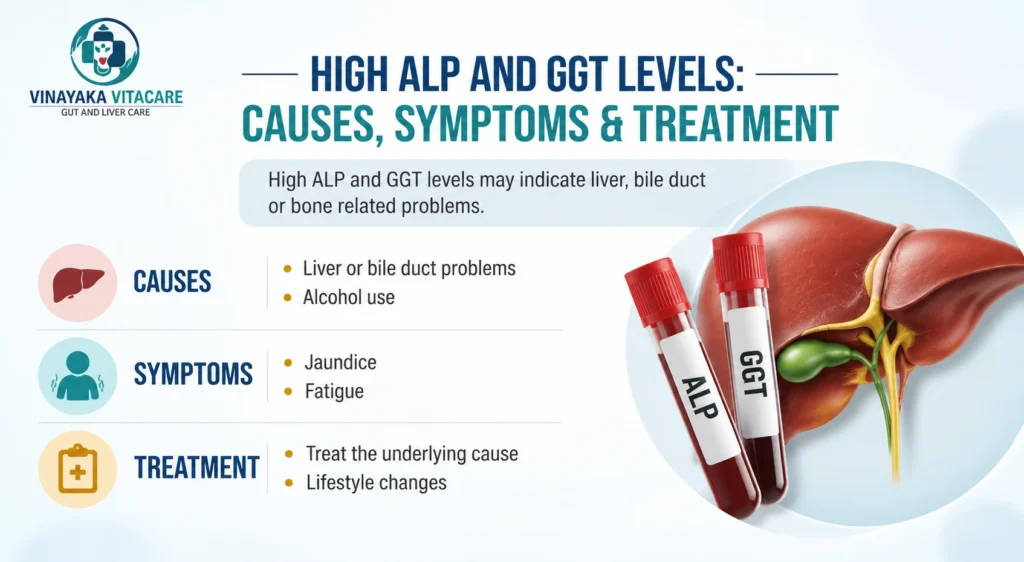
You open your blood report and see two values marked in red: ALP and GGT. Your SGPT and SGOT may look almost normal, which makes it even more confusing. So what does it mean?
High ALP and GGT levels usually point towards a problem with the bile flow, not the liver cells themselves. This is often called a cholestatic pattern. It can come from something simple, like a medicine or a gallstone, or from something that needs a closer look, like a long-standing bile duct disease. The number alone cannot tell you which one it is. This guide explains what the pattern means, what can cause it, and what usually happens next.
What are ALP and GGT?
ALP (alkaline phosphatase) is an enzyme found mainly in the liver and bile ducts, and also in bones, the intestine and, during pregnancy, the placenta.
GGT (gamma-glutamyl transferase) is an enzyme found mostly in the liver and bile ducts, and in small amounts in the kidneys and pancreas.
Bile is the fluid your liver makes to help digest fats. It travels through small tubes called bile ducts into the intestine. When this flow slows down or gets blocked, ALP and GGT leak into the blood and their levels rise. That is why doctors look at these two tests when they suspect a bile flow problem.
Normal ranges differ from lab to lab, so always compare your result with the reference range printed on your own report.
High ALP and GGT vs raised ALT and AST: what is the difference?
This is the key point most people miss. Liver blood tests are not all telling the same story.
- ALT (SGPT) and AST (SGOT) mostly rise when liver cells are injured, for example in viral hepatitis, fatty liver or after some medicines.
- ALP and GGT mostly rise when bile flow is affected, for example when a duct is blocked, narrowed or inflamed.
Doctors often compare how high the ALT is against how high the ALP is. If ALT is much higher, the pattern looks like liver cell injury. If ALP is much higher, the pattern looks like cholestatic liver disease. If both are raised, it may be a mixed pattern. Because this is a pattern, not a diagnosis, it is only the starting point. Many people with abnormal liver blood tests have a mix of findings.
Why is GGT checked together with ALP?
ALP can also rise for reasons that have nothing to do with the liver, such as bone growth in children, bone disease, a healing fracture, or pregnancy. GGT usually does not rise with bone problems.
So when both are high, the liver or bile ducts are more likely the source. When ALP is high but GGT is normal, a bone cause becomes more likely. Your doctor may also ask for a special ALP test to find out whether the enzyme is coming from the liver or the bone.
Common causes of high ALP and GGT levels
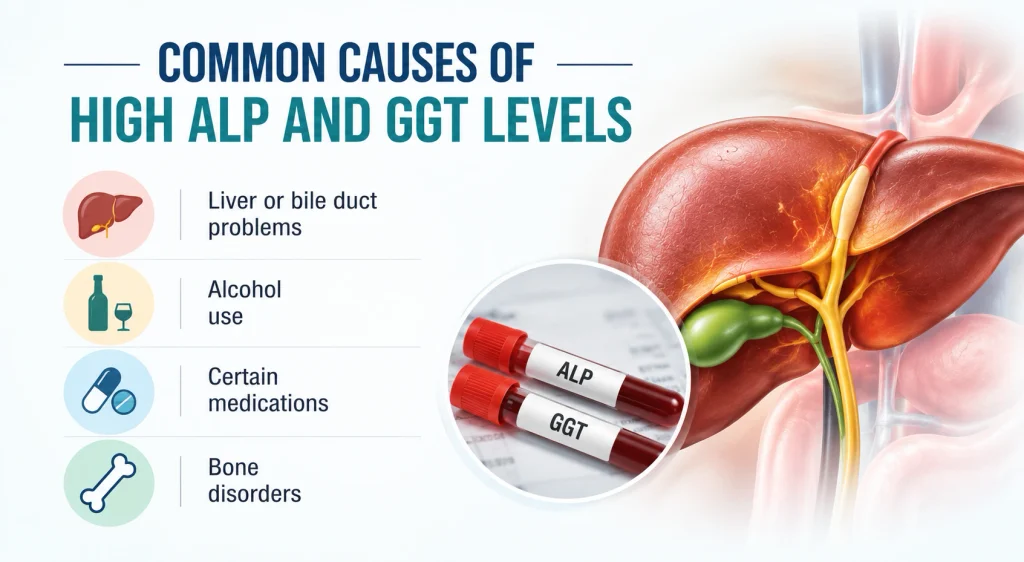
High alkaline phosphatase causes and raised GGT can include:
- Bile duct obstruction: gallstones stuck in the duct, a narrowing (stricture) of the duct, or a growth pressing on the duct, including growths in the pancreas or bile duct.
- Primary biliary cholangitis (PBC): a long-term condition where the small bile ducts in the liver are slowly damaged.
- Primary sclerosing cholangitis (PSC): inflammation and scarring of the bile ducts.
- Medicines and supplements: some antibiotics, anti-seizure medicines, hormonal medicines and herbal products can slow bile flow. Never stop a prescribed medicine on your own. Discuss it with your doctor first.
- Alcohol use: GGT in particular is sensitive to alcohol.
- Fatty liver: GGT is often raised in people with fatty liver disease, especially with diabetes or obesity, and ALP may rise mildly.
- Infiltrative liver conditions: liver tumours, deposits or infections that spread through the liver tissue.
- Cirrhosis or hepatitis: advanced scarring or inflammation can also alter these enzymes.
- Severe infection or sepsis, and some heart-related congestion of the liver.
When ALP is high but GGT is normal, bone causes such as vitamin D deficiency, Paget’s disease of bone, or bone spread of other illnesses are considered. In children, teenagers and pregnant women, a mild rise can be normal.
Symptoms that may go with a cholestatic pattern
Many people with mildly raised ALP and GGT feel completely fine, and the abnormality is found on a routine check. When symptoms do appear, they may include:
- Yellow eyes or skin (jaundice)
- Dark, tea-coloured urine
- Pale or clay-coloured stools
- Itching all over the body, often worse at night
- Pain or discomfort in the upper right abdomen
- Unexplained tiredness or weight loss
- Fever with chills and pain, which can signal an infected bile duct
Fever, jaundice and belly pain together should never be ignored. These need urgent medical attention.
Why one number is never the full story
Your report must be read along with your symptoms, medicines, alcohol history, other family illnesses and other tests. Two people with the same ALP can have very different causes. A mild rise may need nothing more than a repeat test in a few weeks, while a very high rise with jaundice needs quick imaging. Please avoid searching for a diagnosis from the numbers alone, and avoid starting any “liver detox” product based on a report.
Which tests usually come next?
Depending on your situation, a hepatologist may suggest:
- Repeat liver function tests, including bilirubin, to see if the pattern is steady, rising or settling.
- Ultrasound of the abdomen to check the liver, gallbladder, and whether the bile ducts look widened.
- MRCP (a special MRI of the bile ducts) if a blockage or narrowing is suspected.
- CT scan or endoscopic ultrasound to look at the pancreas and surrounding structures.
- Autoimmune and antibody tests, such as anti-mitochondrial antibody (AMA), when PBC is possible.
- ALP isoenzymes, vitamin D and calcium levels if a bone cause is being considered.
- FibroScan to measure liver stiffness and fat.
- Liver biopsy in selected cases, when the diagnosis is still unclear.
Treatment: it depends on the cause
There is no single treatment for raised ALP and GGT, because the enzymes are a signal, not the disease. Treatment follows the cause:
- Blocked or narrowed bile duct: the blockage may be cleared or bypassed with an endoscopic procedure such as ERCP, sometimes with a stent.
- Gallstones: treated depending on their position and your overall health.
- PBC and similar conditions: managed with long-term medicines chosen by the specialist, along with regular monitoring.
- Medicine-related cholestasis: the doctor may change or stop the medicine, and levels often improve over time.
- Fatty liver or alcohol-related changes: weight management, better blood sugar control, a healthier diet and reducing or stopping alcohol.
- Bone-related causes: treated by addressing the bone or vitamin D problem.
Itching, if present, can be treated separately. Please do not take over-the-counter medicines or herbal remedies for it without medical advice.
When should you see a liver specialist?
Meet a doctor soon if your ALP and GGT stay high on a repeat test, if you have jaundice, itching, dark urine or pale stools, or if you have a known liver condition. A liver specialist in Cuttack can look at your report together with your symptoms and decide which tests are actually needed. You can also book an appointment at the clinic and carry all your old reports, your medicine list and any supplements you take.
Key takeaways
- High ALP and GGT levels usually suggest a problem with bile flow, while raised ALT and AST suggest injury to liver cells.
- GGT helps show whether a raised ALP is coming from the liver or the bone.
- Causes range from medicines and fatty liver to gallstones, bile duct narrowing and long-term bile duct diseases.
- Imaging such as ultrasound and MRCP is often the next step.
- Treatment depends on the cause, so get the report reviewed with your symptoms and other tests.
This article is for general education only and is not a substitute for a medical consultation. Please consult a qualified doctor for advice about your own reports.
Frequently asked questions
Can high ALP and GGT levels be normal?
Sometimes. A mild rise can occur during pregnancy, in growing children, after a healing fracture, or with certain medicines. Your doctor will decide whether it needs further tests.
Does high GGT alone mean liver damage?
Not always. GGT is a sensitive marker and can rise with alcohol, some medicines, diabetes or fatty liver, even when the liver is not badly damaged. It is useful mostly when read together with ALP and the other tests.
Are high ALP and GGT dangerous?
It depends entirely on the cause. Some causes are minor and reversible, while others, like a blocked bile duct, need timely treatment.
Can fatty liver cause high ALP and GGT?
Yes, fatty liver can raise GGT and sometimes ALP, though ALT is usually the more obviously raised enzyme in this condition.
Can these levels come back to normal?
In many cases yes, once the cause is found and treated, such as clearing a blockage, stopping a triggering medicine, or improving fatty liver.
Do I need to fast before the test?
Some labs prefer fasting for liver tests, because a heavy meal can slightly raise ALP. Follow the instructions given by your lab or doctor.