

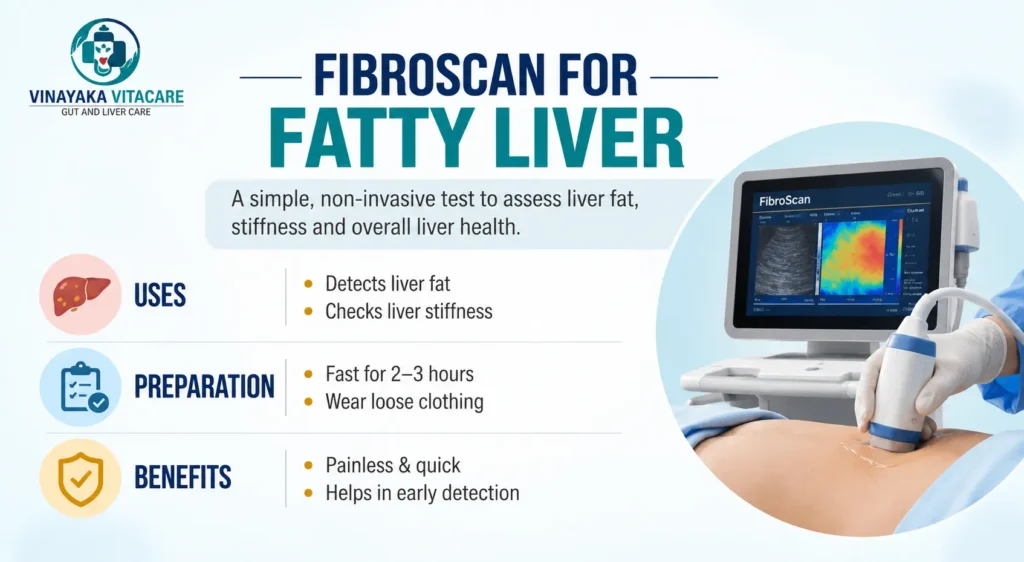
If your ultrasound report says “fatty liver” or “grade 1 fatty liver”, the next question is usually: is it just fat, or is it already causing scarring? An ultrasound cannot answer that properly. This is where a FibroScan for fatty liver helps.
FibroScan is a quick, painless scan that checks how much fat is stored in your liver and how stiff the liver has become. In this guide, we explain what the FibroScan test does, who needs it, how to prepare, how to read the results, and what its benefits and limits are, in simple words.
What is FibroScan?
FibroScan is a special machine used to test the liver without a needle or a cut. The medical name for the technique is transient elastography. It works a bit like a gentle “tap” test. The probe sends a small vibration into the liver, and the machine measures how fast that vibration travels. A healthy, soft liver lets it pass slowly. A scarred, stiff liver lets it pass faster.
Every FibroScan gives you two numbers:
- Liver stiffness (measured in kPa): shows how much scarring (fibrosis) may be present.
- CAP score (measured in dB/m): shows how much fat is stored in the liver. CAP stands for controlled attenuation parameter.
Why is FibroScan important in fatty liver?
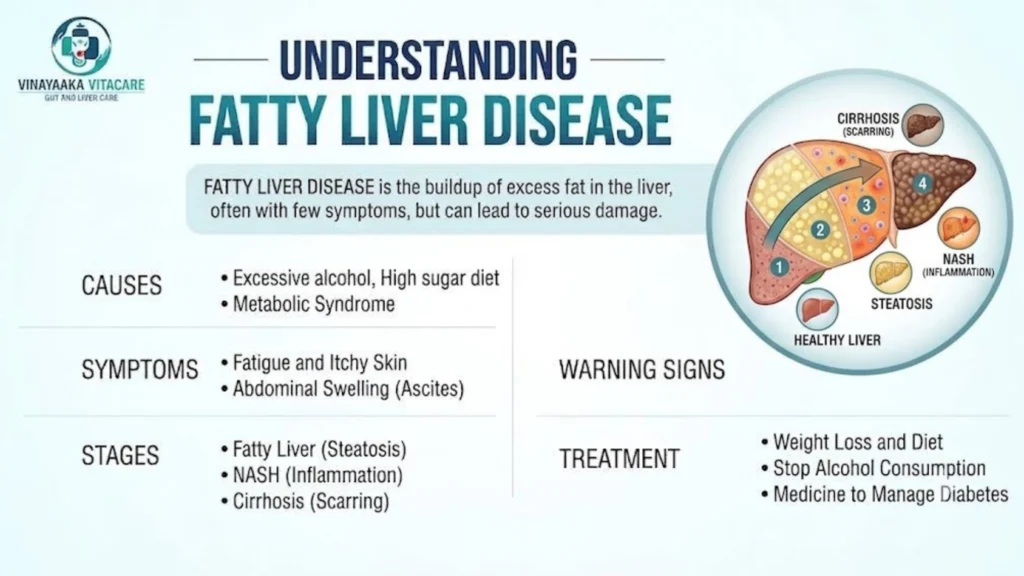
Most people with fatty liver disease have no symptoms. Fat alone is often reversible. The real concern is whether the fat has caused inflammation and scarring, because scarring is what can slowly progress towards cirrhosis.
A normal-looking liver on ultrasound can still have scarring, and a very fatty liver may have none. Blood tests such as SGPT can also be normal even when the liver is stiff. FibroScan fills this gap by telling you the liver stiffness and fat level in one sitting.
Uses of FibroScan for fatty liver
A hepatologist may suggest it to:
- Measure the fat level (steatosis) in the liver.
- Check for scarring (fibrosis) and find out how advanced it is.
- Decide who needs closer follow-up or more tests, and who can be managed with lifestyle changes alone.
- Avoid unnecessary liver biopsy in many patients.
- Track progress after weight loss, diet changes, better sugar control or treatment, by repeating the scan after some months.
- Look at other liver conditions too, such as hepatitis B, hepatitis C or alcohol-related liver disease.
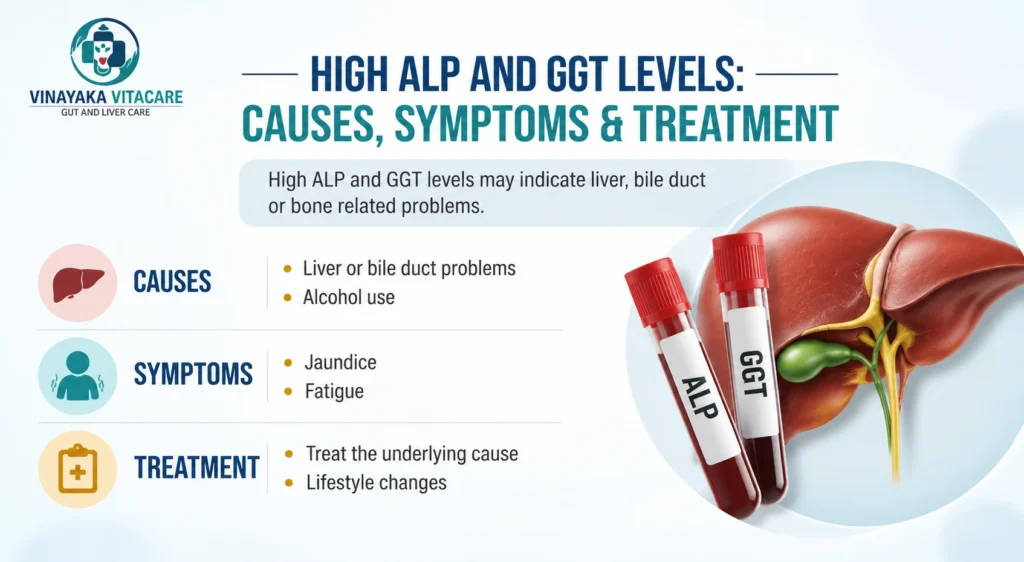
FibroScan is especially useful if you have diabetes, obesity, high cholesterol, high blood pressure, a large waistline, raised liver enzymes, or a family history of liver disease. If your enzymes are abnormal, our post on high ALP and GGT levels explains what those numbers can mean.
How to prepare for a FibroScan
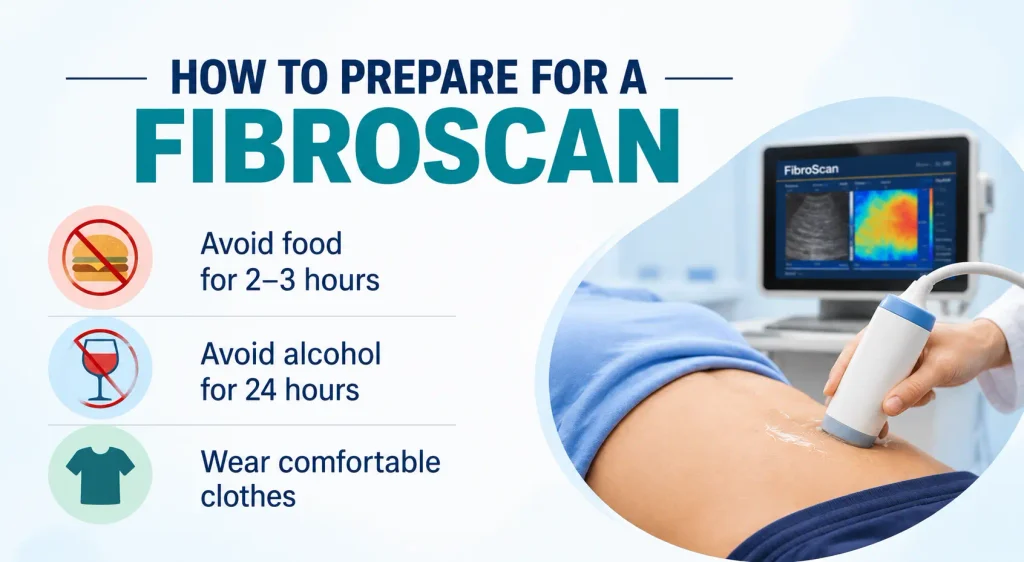
Preparation is simple.
- Fast for about 3 hours before the test. Eating just before a scan can make the stiffness reading appear higher than it really is. Plain water is generally fine.
- Take your regular medicines unless your doctor has told you otherwise.
- Wear loose, comfortable clothes that allow easy access to the right side of the upper abdomen.
- Carry your old reports, such as ultrasound, blood tests and the list of medicines you take.
- Tell the doctor beforehand if you are pregnant, have a pacemaker or any implanted electronic device, or have a lot of fluid in the abdomen. FibroScan may not be suitable or reliable in these situations.
What happens during the test?
The whole procedure usually takes around 10 minutes.
- You lie on your back with your right arm raised behind your head.
- A little gel is applied on the skin between the ribs on the right side.
- The probe is placed gently on that spot, and the machine takes a series of readings.
- You may feel a light flick or tap, but it is not painful.
You can usually go home and resume normal activity immediately. There is no needle, no radiation and no recovery time.
Understanding your FibroScan results
Your report will mention a stiffness value in kPa and a CAP value in dB/m. Exact cut-offs differ a little between studies and between causes of liver disease, so only your doctor can interpret them for you. As a general guide:
Liver stiffness (scarring)
- Lower values (around 7 kPa or less) usually suggest little or no significant scarring.
- Middle values suggest some degree of fibrosis, which needs follow-up.
- Higher values (roughly above 12 to 14 kPa) raise concern for advanced scarring or cirrhosis, and need further evaluation.
CAP score (fat)
- Higher CAP values mean more fat in the liver. Doctors usually group fat into mild, moderate and severe grades.
Please do not judge your own report from a chart on the internet. A reading must be seen together with your symptoms, blood tests, diabetes status, weight and ultrasound findings.
Benefits of FibroScan
- Painless and non-invasive: no needle, no anaesthesia.
- Fast: results are available right away.
- Safe to repeat: since there is no radiation, it can be done again to see how you are responding.
- Helps early detection: scarring can be caught before it causes symptoms.
- Guides treatment: helps your doctor decide the right follow-up and avoid over-testing or under-testing.
- Motivates lifestyle change: seeing a fat score improve after weight loss is encouraging for many patients.
Limitations to know about
FibroScan is a very good screening and monitoring tool, but it is not perfect.
- Results can be less reliable in people with a very high body weight, though a larger probe size can help in many cases.
- Active liver inflammation, a recent heavy meal, liver congestion or fluid in the abdomen can make stiffness look higher than it is.
- It cannot tell the exact cause of liver disease, so it is used along with blood tests and other investigations.
- In some patients with unclear findings, an MRI or a liver biopsy may still be needed.
FibroScan cost
The cost of a FibroScan varies from centre to centre. You can call the clinic or message on WhatsApp to confirm the current charges before your visit.
When should you get a FibroScan?
You should speak to a doctor about a FibroScan if you have been told you have fatty liver, if your liver enzymes are raised, if you have diabetes or obesity with a fatty liver, or if you drink alcohol regularly. A liver specialist in Cuttack can examine you, review your reports and tell you whether the scan is needed in your case. You can book an appointment at the clinic for a proper evaluation.
Key takeaways
- FibroScan for fatty liver measures both liver fat (CAP) and liver stiffness (scarring) in about 10 minutes.
- It is painless, needs no needle, and can be repeated safely.
- Fast for around 3 hours before the test and carry your old reports.
- A normal ultrasound or normal blood tests do not always rule out scarring.
- Results must always be interpreted by a doctor along with your overall health picture.
This article is for general education only and is not a substitute for a medical consultation. Please consult a qualified doctor for advice about your own reports.
Frequently asked questions
Is FibroScan painful?
No. You may feel a light tapping sensation, but it does not hurt.
Do I need to fast before FibroScan?
Yes, a fast of about 3 hours is usually advised, as eating can affect the stiffness result.
Is FibroScan better than ultrasound for fatty liver?
They do different jobs. Ultrasound shows that fat is present, while FibroScan measures the amount of fat and how stiff the liver is. Doctors often use both.
Can FibroScan detect cirrhosis?
It can suggest advanced scarring or cirrhosis when stiffness is high, but the final diagnosis depends on the full clinical picture and other tests.
How often should FibroScan be repeated?
It depends on your results and risk factors. Many people repeat it after some months to a year, especially after lifestyle changes or treatment. Your doctor will tell you the right gap.
Can fatty liver be reversed?
In the early stages, often yes, through weight loss, regular exercise, a healthy diet, better control of sugar and cholesterol, and avoiding alcohol. FibroScan helps you track this improvement.
Can I go back to work after FibroScan?
Yes. There are no restrictions after the test.